

What acute pancreatitis is
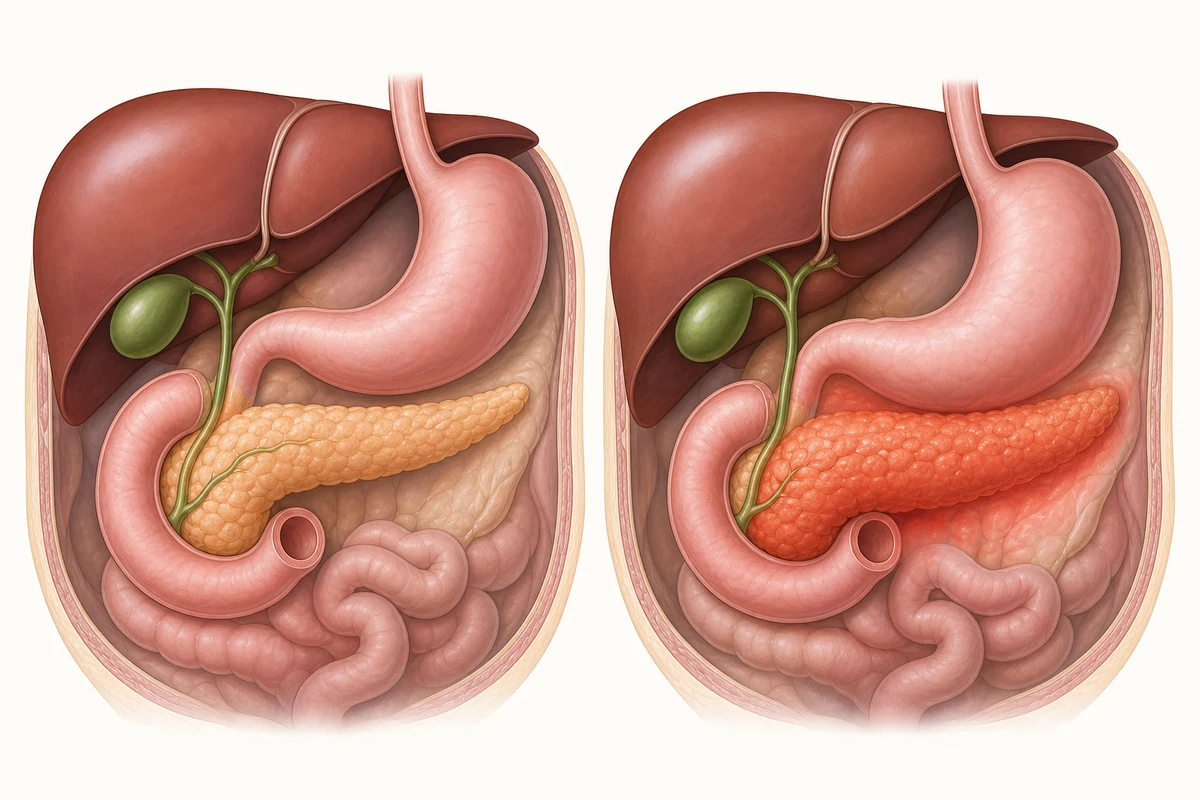
Acute pancreatitis is sudden inflammation of the pancreas. It ranges from a short, uncomplicated illness to severe disease affecting other organs. Early assessment focuses on confirming the diagnosis, identifying the cause and monitoring severity.
Urgent symptoms
Emergency assessment is appropriate
Severe upper abdominal pain, repeated vomiting, faintness, breathlessness, confusion, very low urine output or rapid deterioration needs urgent hospital care.
Common causes
Gallstones
A stone can temporarily block the shared duct opening.
Alcohol-related pancreatitis
Risk varies and support should be non-judgemental.
High triglycerides
Marked elevation can trigger pancreatitis.
Medicines or procedures
Selected medicines or ERCP can be associated.
Other structural or metabolic causes
Calcium, anatomy, trauma or genetic factors in selected cases.
Unclear cause
Some episodes need further investigation after recovery.
Diagnosis and severity assessment
Clinical symptoms
Pain pattern, vomiting and illness severity.
Blood tests
Pancreatic enzymes, liver tests and organ function.
Imaging when indicated
Ultrasound, CT or MRI based on timing and question.
Repeated monitoring
Breathing, circulation, kidneys, infection and nutrition.
Initial hospital treatment
Care may include intravenous fluids, pain relief, anti-nausea treatment, oxygen, close monitoring and management of the cause. Antibiotics are not routinely used for uncomplicated inflammation. Severe cases may need a high-dependency or critical-care setting.
Nutrition and supportive care
Early oral or tube feeding may be encouraged when tolerated because nutrition supports recovery. Prolonged fasting is not automatically required. The route and timing depend on vomiting, pain, gut function and severity.
Gallstone pancreatitis
When gallstones are the cause, clinicians assess for bile-duct blockage or infection. ERCP may be needed urgently in selected patients with cholangitis or ongoing obstruction. Gallbladder surgery may be planned during the same admission or later depending on severity and recovery.
Possible complications
Fluid collections
May resolve or mature over time.
Necrosis
Damaged pancreatic or surrounding tissue can become infected.
Organ failure
Breathing, kidney or circulation support may be needed.
Infection
Requires targeted treatment and sometimes drainage.
Pseudocyst or walled-off necrosis
Intervention depends on symptoms, timing and anatomy.
Longer-term effects
Some people develop recurrent episodes, digestion problems or diabetes.
When drainage, endoscopy or surgery may be considered
Intervention is not routine early treatment. A step-up approach may use radiology or endoscopic drainage before minimally invasive or open surgery. Timing is often delayed until a collection has matured, unless urgent infection or another problem requires action.
Recovery and follow-up
Recurrence prevention
Prevention depends on the cause. It may involve gallbladder surgery, removal of a bile-duct stone, support to stop alcohol, treatment of very high triglycerides, review of medicines or investigation of structural and genetic factors. Advice should be individual and non-stigmatising.
Frequently asked questions
No. Most care is supportive in hospital. Drainage, endoscopy or surgery is reserved for selected causes or complications.
Gallstones and alcohol are common causes, but medicines, high triglycerides, procedures and other factors may contribute. Some cases remain unexplained.
Suspected acute pancreatitis needs medical assessment. Severe pain, vomiting or illness should not be managed through website advice.
The timing of bile-duct treatment or gallbladder surgery depends on severity, jaundice, cholangitis and recovery.
Prevention is cause-specific and may include gallbladder treatment, alcohol support, triglyceride management or medicine review.