

What appendicitis is
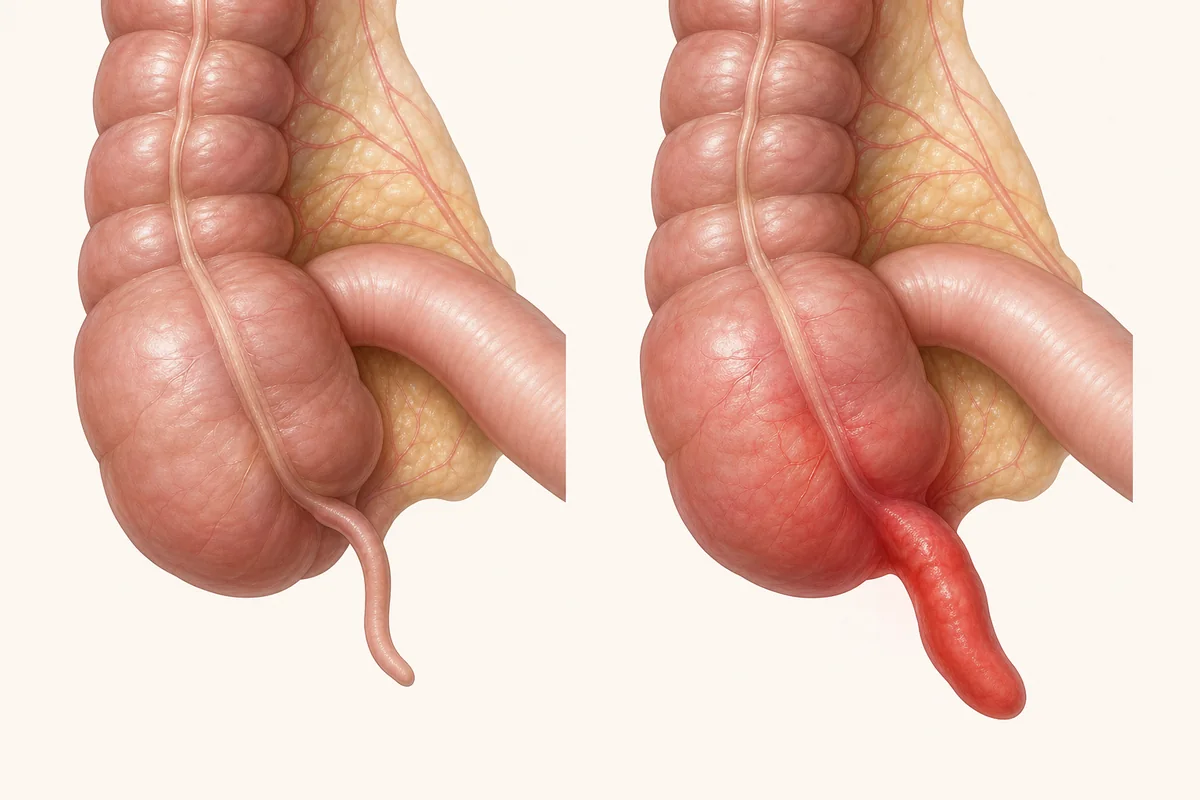
Appendicitis is inflammation of the appendix and often needs urgent hospital assessment. Symptoms can overlap with urinary, gynaecological and other abdominal conditions. The plan may involve surgery, antibiotics in selected circumstances, or drainage and staged care when an abscess is present.
Types, grades or classifications
Uncomplicated appendicitis
Inflammation without a recognised perforation or abscess.
Perforated appendicitis
A hole in the appendix can lead to infection in the abdomen.
Appendix mass or abscess
May require drainage, antibiotics and staged planning.
Alternative diagnosis
Several abdominal and pelvic conditions can mimic appendicitis.
Perforation and abscess
Perforation can spread infection through the abdomen or form a localised abscess. Treatment may include intravenous fluids, antibiotics, drainage, surgery and a longer hospital stay. The sequence depends on stability, imaging and surgical judgement.
Common symptoms
Causes and risk factors
Risk factors can contribute but do not prove why an individual developed the condition. The final page should avoid blame and explain relevant factors clearly.
- Blockage within the appendix
- Infection and inflammation
- Lymphoid tissue swelling
- Less common underlying causes
- No single preventable cause in many cases
When to consult
Arrange an assessment when symptoms are new, persistent, recurrent, worsening or affecting daily activity. A clinician can examine the area, review medicines and other conditions, and decide whether testing is needed. Increasing lower-right abdominal pain, fever, repeated vomiting, abdominal rigidity, faintness or rapid deterioration needs emergency assessment rather than a routine clinic appointment.
How the condition is diagnosed
History
Clarify symptom pattern, duration, previous treatment and relevant health factors.
Examination
A respectful, focused examination is explained before it is performed.
Tests if needed
Imaging, blood tests or endoscopic assessment depend on the condition.
Shared plan
Findings are discussed with non-surgical and surgical options.
Non-surgical treatment
Antibiotic treatment may be considered in selected uncomplicated cases after imaging and clinical assessment, but recurrence and treatment failure are possible. An abscess may need drainage. The safest pathway depends on severity, age, pregnancy status, coexisting illness and access to follow-up.
Antibiotics in selected circumstances
Some patients with uncomplicated appendicitis may be considered for antibiotics, but this requires careful diagnosis, discussion of failure or recurrence, and reliable follow-up. It is not a do-it-yourself alternative to emergency assessment.
When surgery may be considered
Appendicectomy may be advised when appendicitis is confirmed or strongly suspected, particularly when complications are a concern. Laparoscopic or open surgery may be used. Emergency findings, anatomy and safety can alter the planned approach.
Verified procedure options
Laparoscopic appendicectomy — needs verification
Camera-assisted removal through small incisions for suitable patients.
Open appendicectomy — needs verification
May be selected or required depending on infection and anatomy.
Abscess drainage pathway — needs verification
Radiology or surgical drainage may be needed before later decisions.
Treatment or procedure comparison
| Option or condition | What it involves | When it may be discussed | Important limitation |
|---|---|---|---|
| Antibiotic pathway | Selected uncomplicated cases | Avoids immediate surgery in some patients | Failure or recurrence may occur |
| Laparoscopic appendicectomy | Camera-assisted removal | Allows abdominal assessment | May convert to open |
| Open appendicectomy | Direct incision | May suit selected complicated cases | Recovery depends on infection severity |
Preparing for treatment or surgery
- Bring current medicines, allergies, reports and previous operation details.
- Follow fasting and medicine instructions supplied by the treating team.
- Arrange support for travel and recovery when advised.
- Ask how diabetes, blood thinners, smoking, nutrition or other conditions affect the plan.
- Report fever, infection or a change in symptoms before the planned procedure.
What happens on the day
Identity, consent, the planned procedure and relevant test results are checked. The anaesthesia and surgical teams explain immediate steps and answer questions. The actual pathway depends on whether care is an office procedure, day surgery or hospital admission. No admission or discharge timing should be promised before assessment.
Hospital stay
The length of stay depends on procedure type, pain control, eating and drinking, mobility, urine or bowel function, complications and home support. Some patients may leave the same day, while others need observation or a longer stay. The final content should present ranges only after the clinical team approves them.
Recovery timeline
Follow-up
Follow-up may include wound review, symptom assessment, pathology discussion, medicine changes and guidance on activity, diet or bowel care. The page should provide a verified contact route for unexpected symptoms and make clear which problems need emergency care.
Potential benefits
Potential benefits depend on the diagnosis and chosen treatment. They may include relief of troublesome symptoms, treatment of a complication, reduction of future risk in selected cases and improved function. No outcome can be assured, and benefits should be weighed against alternatives and the option of observation where appropriate.
Risks and possible complications
Potential benefits
- Treatment matched to the confirmed diagnosis
- Opportunity to address persistent or complicated disease
- A structured recovery and follow-up plan
Risks and limitations
- Pain, bleeding, infection or wound problems
- Anaesthesia and blood-clot risks
- Condition-specific recurrence or functional effects
- Need for a different or additional procedure
Cost factors
No fee is shown online. A transparent estimate should separate professional, facility, anaesthesia, investigation, implant or consumable, medicine and follow-up components where applicable.
Why Dr. Yadav may be relevant
This section must use only verified credentials, registration, current roles, relevant training and procedures. Until those facts are confirmed, the page should state that Dr. Himanshu Yadav is presented as a surgical gastroenterologist in Agra and invite visitors to review the verified profile before requesting a consultation.
Agra clinic module
Dr Himanshu's Clinic
Dr Himanshu's Clinic, First Floor, Shanti Madhuvan Plaza, Near Pushpanjali Hospital, Delhi Gate Rd, Agra, Uttar Pradesh 282002OPD: 12 PM–6 PM · Operative hours: 8 AM–12 PM. Parking, wheelchair access and lift are available.
Frequently asked questions
No. The decision depends on symptoms, examination, test results, risks and response to non-surgical care. A consultation is required to determine suitability.
Tests vary by the condition and clinical findings. The page demonstrates a diagnostic pathway but should not be used to request a fixed investigation package.
Recovery differs by procedure, severity, occupation and individual health. The timeline is educational and the treating team should provide personalised instructions.
A meaningful estimate can be prepared only after the diagnosis, procedure, hospital, anaesthesia, consumables and expected stay are known. No price is shown online.
Increasing lower-right abdominal pain, fever, repeated vomiting, abdominal rigidity, faintness or rapid deterioration needs emergency assessment rather than a routine clinic appointment.
Bring current medicines, previous operation notes, relevant imaging and reports, identification and a brief symptom timeline. Do not delay urgent care to collect documents.
References
- Podda M, Ceresoli M, De Simone B, et al. Diagnosis and Treatment of Acute Appendicitis: 2025 Edition of the World Society of Emergency Surgery Jerusalem Guidelines. JAMA Surgery. 2026;161(3):283–295. doi:10.1001/jamasurg.2025.6218.
- Society of American Gastrointestinal and Endoscopic Surgeons. Guideline for the Diagnosis and Treatment of Appendicitis. Published November 2023. Accessed 23 July 2026.
- NHS. Appendicitis. Page last reviewed 9 August 2024. Accessed 23 July 2026.
- National Institute of Diabetes and Digestive and Kidney Diseases. Appendicitis. Last reviewed July 2021. Accessed 23 July 2026.
These sources support general patient education. Suspected appendicitis needs urgent clinical assessment, and diagnosis and treatment must be individualised.