

What GERD is
Gastro-oesophageal reflux disease occurs when stomach contents repeatedly flow into the oesophagus and cause troublesome symptoms or complications. Heartburn alone is not enough to decide on surgery because symptoms can have other causes.
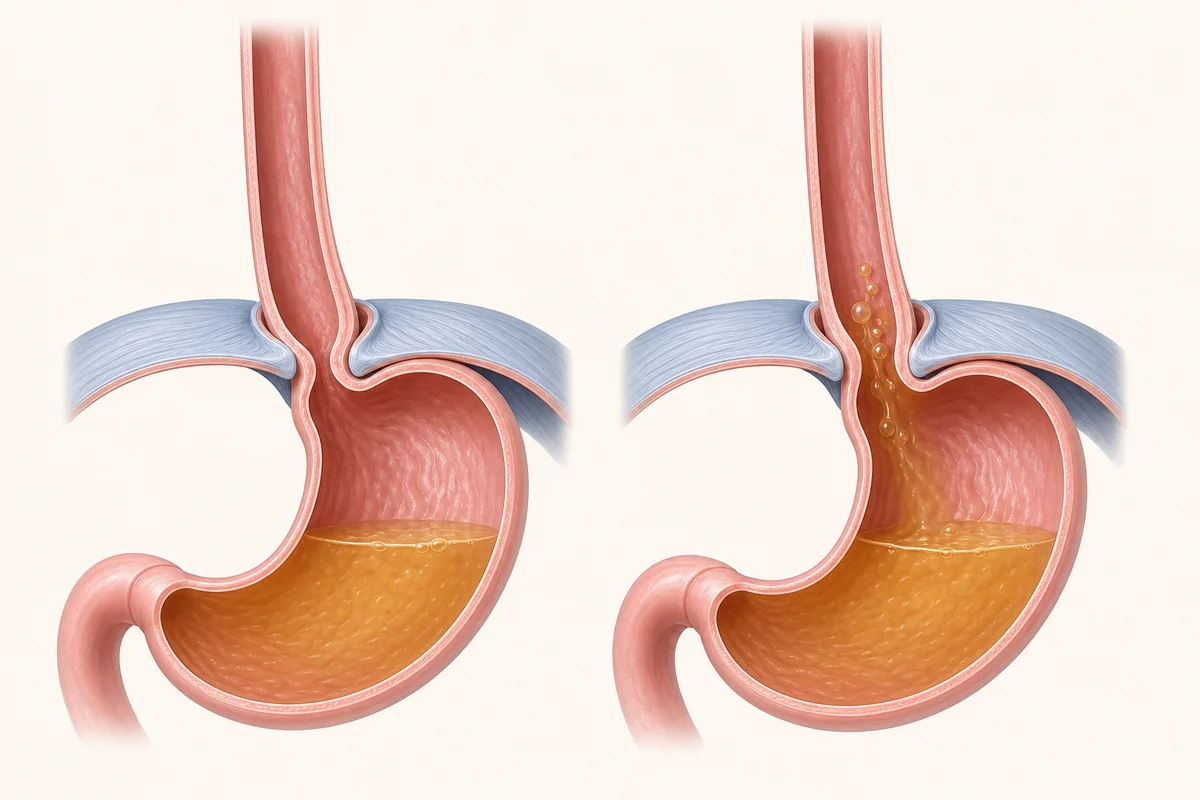
Hiatal hernia relationship
A hiatal hernia occurs when part of the stomach moves through the diaphragm opening. It can contribute to reflux but may be present without symptoms. Size, anatomy and symptom correlation matter.
Symptoms
When to consult
Seek assessment for persistent symptoms despite treatment, swallowing difficulty, bleeding, weight loss, anaemia, recurrent aspiration or a large hiatal hernia. Chest pain, severe breathlessness or faintness needs urgent medical evaluation.
Lifestyle and medical treatment
Meal timing, weight management where appropriate, avoiding individual triggers, stopping smoking, elevating the head of the bed and acid-suppressing medicines may help. Advice should be personalised and not become an unnecessarily restrictive diet.
Endoscopy
Endoscopy can assess inflammation, narrowing, Barrett’s oesophagus, a hiatal hernia and other conditions. A normal endoscopy does not necessarily exclude reflux, so symptom testing may still be needed.
pH testing and manometry
Ambulatory pH or impedance testing measures reflux over time. Manometry assesses oesophageal movement and helps plan surgery. These tests should be performed and interpreted through a verified gastroenterology pathway.
When surgery may be considered
Surgery may be discussed for objectively confirmed reflux with persistent regurgitation, medicine intolerance, selected complications or a significant hiatal hernia. Symptoms must match test findings and oesophageal movement should be assessed.
Verified anti-reflux procedures
Hiatal hernia repair — verify
Narrows the diaphragm opening around the oesophagus.
Fundoplication — verify
Wraps part of the stomach around the lower oesophagus.
Alternative anti-reflux procedure — verify
Availability, evidence and selection require confirmation.
Revisional surgery — verify
Complex pathway after a previous operation.
Preparation
- Confirm reflux objectively where required.
- Review endoscopy, pH and manometry results.
- Discuss swallowing function and dietary changes.
- Review previous abdominal or anti-reflux surgery.
- Plan staged return to food after the operation.
Recovery
Risks
Potential benefits
- Reduced reflux or regurgitation in selected patients
- Repair of a significant hiatal hernia
- Potential reduction in medicine dependence
Risks and limitations
- Swallowing difficulty, bloating or inability to belch
- Hernia or reflux recurrence
- Bleeding, infection or organ injury
- Need for dilation, revision or ongoing medicine
Frequently asked questions
No. Lifestyle measures and medicines control symptoms for many people. Surgery is considered only after diagnosis and suitability testing.
No. A hiatal hernia occurs at the diaphragm where the oesophagus passes into the abdomen.
Endoscopy, pH monitoring, manometry and imaging may be used depending on the question and previous results.
Some people may still need medicines or further treatment. Outcomes vary.