

What common bile-duct stones are
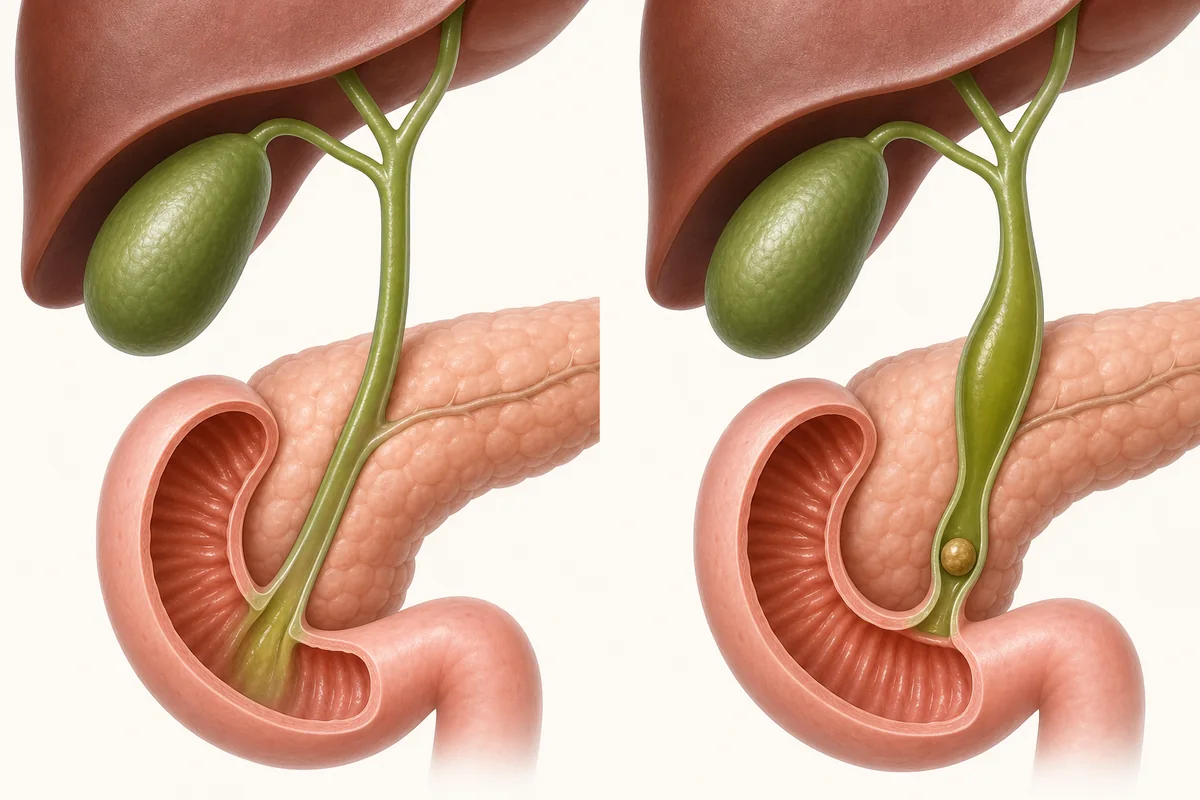
Common bile-duct stones are stones located in the main duct carrying bile from the liver and gallbladder to the intestine. They may cause no symptoms initially or lead to jaundice, infection or pancreatitis.
Symptoms
Jaundice and infection alert
Possible cholangitis
Jaundice with fever, chills, confusion, faintness or worsening abdominal pain can be a serious bile-duct infection and needs urgent hospital treatment.
Diagnosis
Blood tests may show changes in liver function or infection. Ultrasound can detect gallstones and duct widening. MRCP, endoscopic ultrasound or CT may clarify whether a duct stone is present.
Ultrasound, MRCP and related tests
| Test | What it can show | Important note |
|---|---|---|
| Ultrasound | Gallstones, duct size and some obstructions | May not show every duct stone |
| MRCP | Non-invasive magnetic-resonance view of bile ducts | Diagnostic rather than a treatment |
| Endoscopic ultrasound | Detailed view near the duct opening | Requires a verified endoscopy pathway |
| ERCP | Direct duct access with potential treatment | Has procedure risks and should be used selectively |
ERCP distinction
ERCP uses an endoscope passed through the mouth to reach the bile-duct opening. It may cut the opening, remove stones or place a stent. Risks include pancreatitis, bleeding, infection and perforation. It is different from laparoscopic gallbladder removal.
Relationship to gallbladder surgery
When stones have migrated from the gallbladder, cholecystectomy may be advised after the duct is cleared to reduce recurrence risk. Timing depends on infection, pancreatitis, fitness and hospital planning.
Treatment sequence
Stabilise urgent illness
Fluids, antibiotics and monitoring when infection is present.
Confirm or strongly suspect a duct stone
Use laboratory and imaging evidence.
Clear or drain the duct
ERCP or another verified pathway in selected cases.
Address the gallbladder
Surgery may be planned when appropriate.
Recovery
Recovery depends on whether there was infection, pancreatitis, ERCP, surgery or a stent. Persistent pain, fever, jaundice, vomiting or black stool after a procedure needs prompt assessment. Stents require a documented removal or exchange plan.
Frequently asked questions
They may originate in the gallbladder but are located in the common bile duct, where they can block bile flow.
ERCP is an endoscopic procedure used to access the bile duct and remove selected stones. It does not remove the gallbladder.
Often it is considered after duct clearance when gallstones caused the problem, but timing depends on severity and health.
[Confirm whether ERCP is performed directly, by another specialist at the hospital or through referral.]