
Jump to a guide
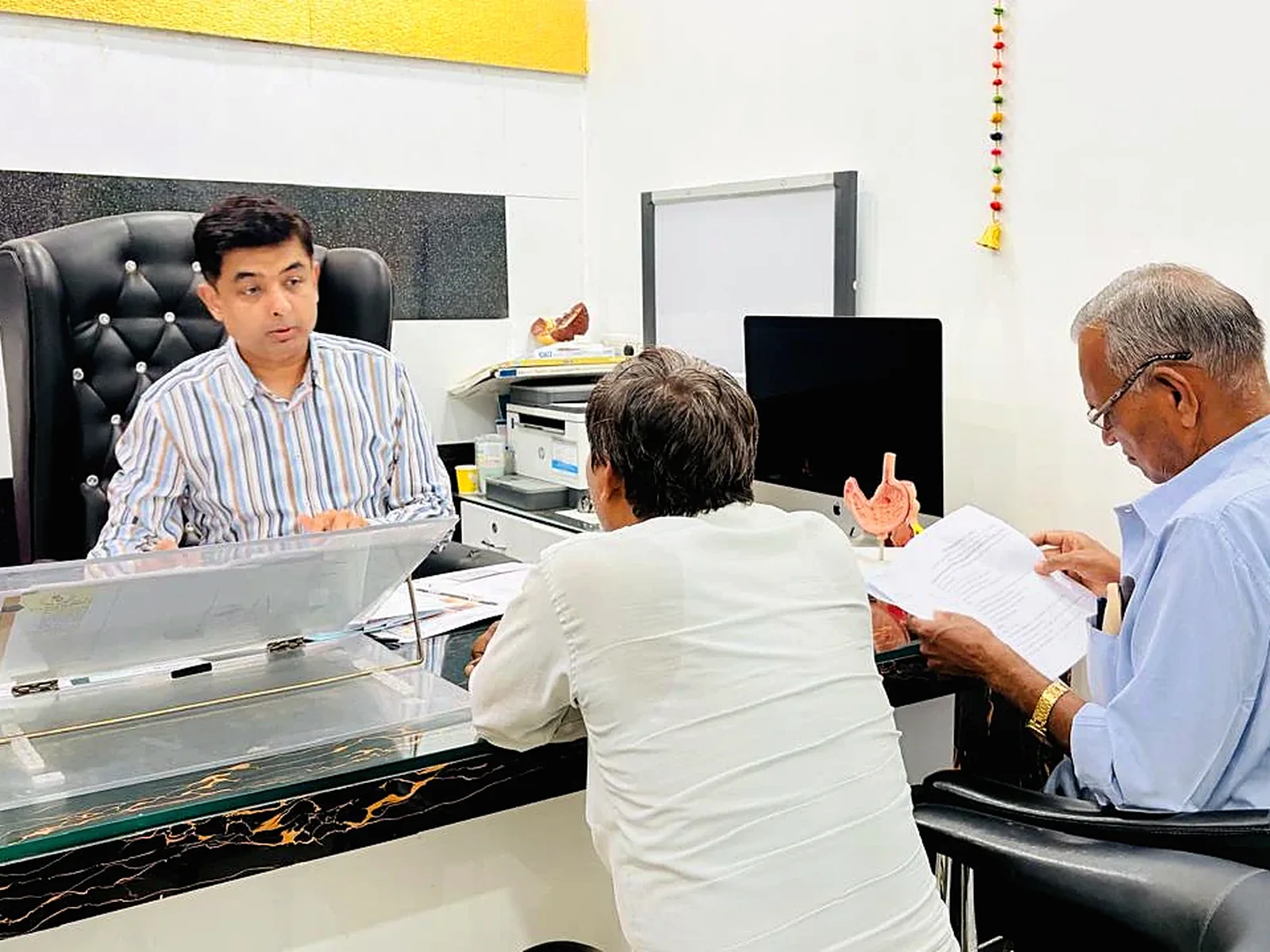
Preparing for a consultation
What should I bring to a surgical gastroenterology consultation?
Bring a current medicine and allergy list, relevant reports and images, previous operation or discharge records, and a short timeline of your symptoms. Write down your main questions before you arrive.
A clear symptom history helps the consultation focus on what has changed and what matters most to you. Note when symptoms began, where they occur, how often they happen, what makes them better or worse, and whether you have noticed fever, vomiting, bleeding, jaundice, weight loss or a change in bowel habits.
Useful preparation
- List every prescription medicine, over-the-counter medicine, vitamin, herbal product and supplement with the dose and timing.
- Record medicine, food and latex allergies, including the reaction you experienced.
- Bring relevant blood-test reports, scan reports and the actual scan images when available, plus endoscopy, biopsy or pathology reports.
- Bring previous operation notes and discharge summaries if they relate to the current problem.
- Write your three most important questions and what outcome you hope to achieve.
- Ask a trusted person to attend if you would value help remembering information, and request language or accessibility support in advance.
During the consultation, ask what the likely diagnosis is, whether any additional test is needed, what the reasonable treatment options are, and the benefits, important risks and likely consequences of each option—including no immediate treatment when that is medically reasonable.
Preparing for surgery
How should I prepare for planned gastrointestinal surgery?
Confirm the procedure, hospital and admission plan; follow the exact fasting and medicine instructions supplied by the treating team; arrange transport and support; and report any new illness before admission.
Preparation depends on the operation, anaesthetic, other health conditions and hospital protocol. General information online must not replace the written plan from your surgeon, anaesthetist and hospital.
Before the admission date
- Make sure you understand why the operation is advised, the alternatives, expected benefits, important risks and expected recovery.
- Complete only the tests or specialist assessments requested by the treating team.
- Tell the team about diabetes, heart or lung disease, kidney or liver disease, bleeding problems, sleep apnoea, implanted devices and previous anaesthetic problems.
- Discuss all medicines early—especially blood thinners, diabetes medicines and weight-management medicines. Do not stop or change a medicine unless the prescribing or surgical team tells you exactly how.
- Follow the hospital's exact instructions for solid food, milk and clear liquids. If the instructions are missing or unclear, contact the hospital rather than guessing.
- Arrange an adult to take you home and stay with you if the hospital requires this after anaesthesia or day surgery.
- Tell the team promptly if you develop fever, cough, vomiting, diarrhoea, a skin infection or another new illness before surgery.
If you smoke or drink alcohol, be honest with the team. Safer reduction or cessation planning may lower perioperative risk, but the appropriate plan and timing are individual.
Reports and investigations
Which reports are useful for a surgeon to review?
Bring records that relate to the current symptoms: blood tests, ultrasound/CT/MRI reports and images, endoscopy reports, biopsy or pathology results, and earlier operation or discharge documents.
A report is the radiologist's or clinician's written interpretation; the images are the original ultrasound, CT or MRI pictures. The surgeon may need both. If imaging is supplied on a CD, USB drive, film or patient portal, keep it with the written report.
How to organise records
- Keep reports in date order and label image discs or films with your name and the study date.
- Bring the most recent results and important older results that show change over time.
- Carry copies where possible and retain originals safely.
- Include pathology blocks or slides only when the treating team specifically requests them.
- Do not arrange scans or blood tests solely because they appear on a website checklist; unnecessary tests may not answer the clinical question.
If records are unavailable, list the hospital or laboratory, approximate date and type of investigation so the team can advise what is genuinely needed.
Hospital admission
What should I take for a planned hospital admission?
Take your admission papers, identification, reports requested by the team, an accurate medicine list, basic toiletries, comfortable clothing and any essential assistive device. Follow the hospital's own packing instructions.
Documents and health information
- Admission letter and identity documents
- Requested reports and imaging
- Medicine and allergy list
- Insurance or payment documents, if applicable
- Emergency contact details
Personal essentials
- Glasses, hearing aids and labelled cases
- CPAP device or walking aid if instructed
- Comfortable, loose clothing and footwear
- Basic toiletries
- Minimal valuables
Take regular medicines in their original labelled packs if the hospital asks you to bring them, but do not self-administer medicines during admission unless the hospital team specifically permits it. On arrival, confirm your name, planned procedure, allergies and fasting status whenever asked—repeated safety checks are intentional.
Before discharge, make sure you receive written instructions for medicines, diet, wound care, activity, warning signs, contact arrangements and follow-up. Confirm who will take you home and whether someone needs to stay with you.
Recovery and wound care
How should I care for a surgical wound at home?
Follow the operation-specific discharge instructions, keep the dressing and wound clean as directed, wash your hands before touching the area, and seek advice for increasing redness, heat, swelling, pain, discharge, wound opening or fever.
Recovery time varies with the operation, whether it was planned or emergency surgery, your general health and any complications. Tiredness and reduced appetite can occur, but the overall trend should gradually improve.
General recovery principles
- Take pain medicine exactly as prescribed; ask before adding over-the-counter medicines or supplements.
- Move and walk as advised. Early, appropriate movement supports circulation, breathing and return of function.
- Follow the specific dressing, bathing and suture or staple instructions from the surgical team.
- Do not apply antiseptic, powder, herbal paste, cream or antibiotic ointment unless the team has advised it.
- Respect lifting, driving, work and exercise restrictions. These vary by procedure and cannot be set by a general webpage.
- Track fluids, food tolerance, urine, bowel function, pain and wound changes if recovery is not straightforward.
Contact the treating team earlier than planned if pain or wound symptoms are worsening, medicines cause troublesome effects, eating or drinking is difficult, or the expected recovery plan is unclear.
Diet and nutrition
What should I eat after gastrointestinal surgery?
Follow the diet prescribed for your particular operation. If no restriction is given, recovery often focuses on adequate fluids, gradual return to balanced meals and enough protein and energy to support healing.
There is no single “post-surgery diet” suitable for every patient. Advice can differ after oesophageal, stomach, bowel, liver, pancreas, gallbladder or bariatric procedures, and may also change with diabetes, kidney disease, food intolerance or malnutrition.
Safe general principles
- Start and advance food only as instructed; smaller, more frequent meals may be easier early in recovery.
- Drink enough fluid unless a clinician has prescribed a restriction.
- Include suitable protein sources and a varied balance of foods as tolerated.
- Increase fibre only when appropriate for the operation and symptoms; fibre is not automatically suitable immediately after every bowel procedure.
- Avoid unproven detoxes, extreme restriction and high-dose supplements. Some supplements interact with medicines or affect bleeding.
- Ask for a dietitian review if you have major weight loss, persistent poor intake, repeated vomiting, swallowing difficulty or a complex procedure-specific diet.
Persistent vomiting, inability to keep fluids down, increasing abdominal swelling or severe pain needs prompt clinical assessment—not repeated diet changes at home.
Follow-up appointments
What is checked at a follow-up appointment?
The review may cover symptom change, pain, wounds, food and fluid intake, bowel function, activity, medicines, test or pathology results and the next stage of care.
The timing and format of follow-up depend on the diagnosis and procedure. Do not assume a date from another patient's experience. Confirm whether your review is at the clinic, hospital, by telephone or with another member of the treating team.
Prepare a brief progress summary
- Record what is improving, unchanged or worsening.
- List pain medicines and any side effects.
- Note wound changes, fever, food tolerance, bowel or urinary concerns and activity level.
- Bring discharge documents and results received since the procedure.
- Ask when driving, lifting, exercise, work and travel may resume for your operation.
- Confirm whether further tests, pathology discussion, suture removal or another appointment is needed.
Do not wait for a scheduled review when a warning sign develops. Use the discharge contact instructions or seek urgent assessment according to severity.
When to seek urgent help
Seek urgent in-person assessment
Go to the nearest emergency department or use local emergency services for severe or rapidly worsening symptoms. The clinic phone and WhatsApp are not emergency-monitoring services.
Warning signs can include
- Severe, rapidly worsening or persistent abdominal pain, especially with a rigid or increasingly swollen abdomen
- Heavy rectal or wound bleeding, vomiting blood, black tar-like stools, fainting or marked weakness
- Repeated vomiting, inability to keep fluids down or signs of dehydration
- Chest pain, new breathing difficulty, confusion, collapse or blue lips
- New calf pain or swelling, particularly with breathlessness
- High fever or chills with worsening abdominal symptoms, jaundice or a painful wound
- A wound that opens, exposes tissue, drains pus, bleeds persistently, or develops spreading redness and heat
- Symptoms specifically identified as urgent in your discharge papers
This list is not exhaustive. If you feel seriously unwell, seek emergency assessment even if the exact symptom is not listed.
Condition-specific information
General preparation advice cannot explain the diagnosis or treatment that is right for an individual. Use the condition and treatment pages below as an educational starting point, then arrange a clinical assessment for personalised advice.
Hernia
Symptoms, types, assessment and surgery planning.
Gallstones
Biliary pain, complications and gallbladder surgery.
Piles and anorectal conditions
Haemorrhoids, anal fissure and anal fistula information.
Pancreas and bile duct
Acute pancreatitis, bile duct stones and pancreatic surgery.
Colorectal conditions
Colon, rectal and rectal prolapse surgery information.
Gastrointestinal cancer
Multidisciplinary evaluation and surgical planning.
Bariatric surgery
Assessment, procedures, nutrition and long-term follow-up.
All conditions
Browse the complete condition directory.
References
- MedlinePlus: Talking With Your Doctor — preparing medicines, allergies, symptoms and questions for an appointment.
- NICE NG180: Perioperative care in adults — information, preparation, fasting, medicines, safety and postoperative care.
- World Health Organization: Patient information for surgical safety — essential discussions before and after surgery.
- NHS: Going into hospital as a patient — planned admission and medicine instructions.
- NICE NG125: Surgical site infections—prevention and treatment — postoperative wound care and signs of infection.
- NHS: Recovering after an operation — activity, wound care and possible blood-clot symptoms.
Dr. Himanshu Yadav, M.S., M.Ch. (Surgical Gastroenterology)