

What an anal fissure is
An anal fissure is a small tear in the lining of the anal canal. It often causes sharp pain during a bowel movement, followed by burning or aching, and may cause a small amount of bright-red bleeding. Other conditions can produce similar symptoms, so examination may be needed.
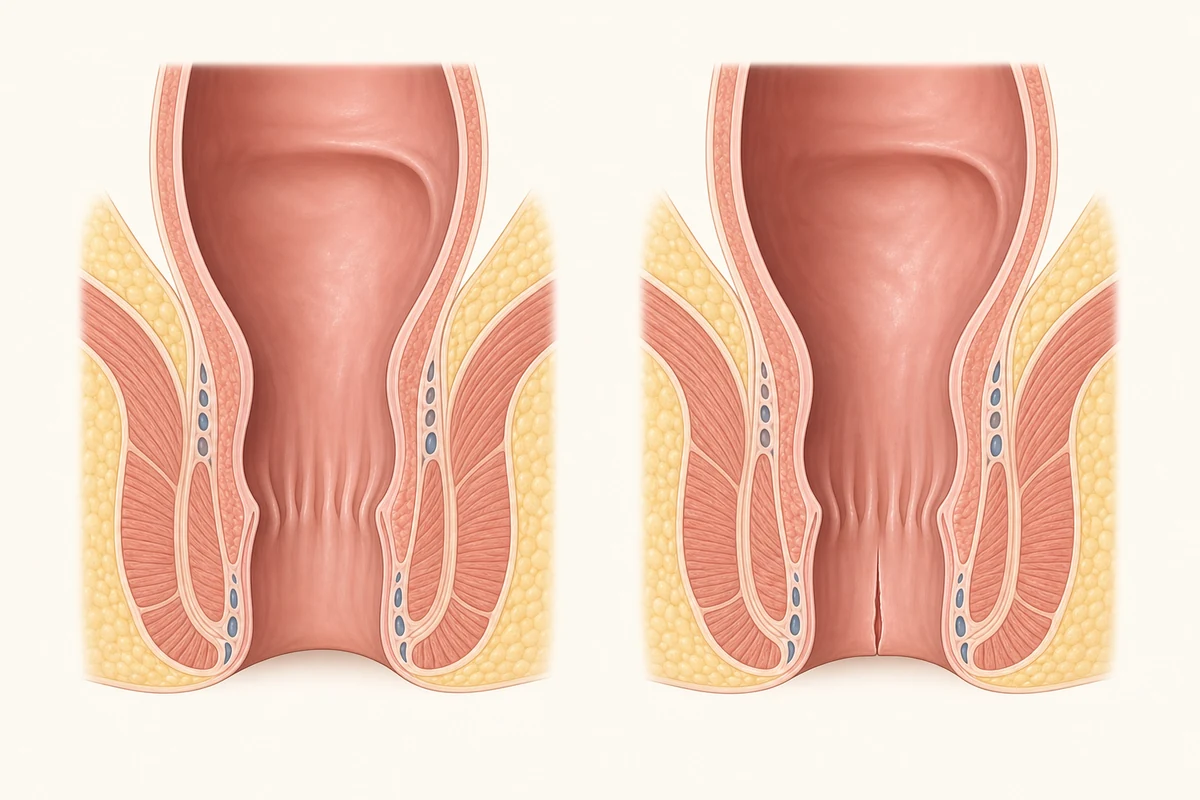
Types, grades or classifications
Acute fissure
A recent tear that may improve with bowel-habit and symptom management.
Chronic fissure
A longer-standing fissure with changes that may require specialist treatment.
Typical position
Many fissures occur in a characteristic midline location.
Atypical fissure
A different position or multiple fissures may prompt assessment for another cause.
Typical pain pattern
Many patients describe sharp pain as stool passes, followed by burning or spasm that may last for a variable period. The pattern is useful but not diagnostic. Constant severe pain, fever or swelling suggests that another condition, such as an abscess, should be considered.
Fissure versus piles and fistula
| Condition | Common pattern | Important distinction |
|---|---|---|
| Anal fissure | Sharp pain with or after stool, small bright-red bleed | Pain is often prominent |
| Piles | Bleeding, prolapse or itching | Marked pain may indicate thrombosis or another diagnosis |
| Anal fistula | Recurrent discharge or abscess-like swelling | Often requires track assessment |
Common symptoms
Causes and risk factors
Risk factors can contribute but do not prove why an individual developed the condition. The final page should avoid blame and explain relevant factors clearly.
- Hard or large stool
- Repeated diarrhoea in some patients
- Anal sphincter spasm and reduced blood flow
- Childbirth-related trauma in some patients
- Underlying inflammatory or infectious disease in atypical cases
When to consult
Arrange an assessment when symptoms are new, persistent, recurrent, worsening or affecting daily activity. A clinician can examine the area, review medicines and other conditions, and decide whether testing is needed. Fever, pus, a rapidly increasing swelling, severe constant pain, heavy bleeding or faintness are not typical features of an uncomplicated fissure and may need urgent assessment.
How the condition is diagnosed
History
Clarify symptom pattern, duration, previous treatment and relevant health factors.
Examination
A respectful, focused examination is explained before it is performed.
Tests if needed
Imaging, blood tests or endoscopic assessment depend on the condition.
Shared plan
Findings are discussed with non-surgical and surgical options.
Non-surgical treatment
Initial management may include stool-softening measures, fibre and fluid guidance, warm baths, pain relief and prescribed topical medicines. The exact plan should consider pregnancy, other medicines and medical conditions. A chronic fissure or symptoms that do not improve should be re-evaluated rather than repeatedly self-treated.
When surgery may be considered
A procedure may be discussed for a chronic fissure that remains symptomatic despite appropriate non-surgical treatment. The aim is to reduce spasm and support healing while carefully considering continence risk. Technique choice must be individualised and confirmed as part of the verified service scope.
Verified procedure options
Service verification required
Only procedures confirmed by Dr. Yadav and the treating facility should remain on the production page.
Topical treatment pathway
Prescription options may reduce sphincter spasm; specific medicines need clinician review.
Injection treatment — needs verification
Include only after confirming availability, indications and follow-up.
Lateral internal sphincterotomy — needs verification
Potential benefit and continence risk require individual discussion.
Alternative procedures — needs verification
Selected patients may need a different approach based on examination findings.
Recovery and prevention timeline
Treatment or procedure comparison
| Item | Typical pattern | Planning note |
|---|---|---|
| Acute fissure | Recent symptoms and a fresh tear | Often starts with non-surgical treatment |
| Chronic fissure | Persistent symptoms and chronic tissue changes | May need specialist medication or a procedure |
| Atypical fissure | Unusual site or appearance | May need investigation for another condition |
Preparing for treatment or surgery
- Bring current medicines, allergies, reports and previous operation details.
- Follow fasting and medicine instructions supplied by the treating team.
- Arrange support for travel and recovery when advised.
- Ask how diabetes, blood thinners, smoking, nutrition or other conditions affect the plan.
- Report fever, infection or a change in symptoms before the planned procedure.
What happens on the day
Identity, consent, the planned procedure and relevant test results are checked. The anaesthesia and surgical teams explain immediate steps and answer questions. The actual pathway depends on whether care is an office procedure, day surgery or hospital admission. No admission or discharge timing should be promised before assessment.
Hospital stay
The length of stay depends on procedure type, pain control, eating and drinking, mobility, urine or bowel function, complications and home support. Some patients may leave the same day, while others need observation or a longer stay. The final content should present ranges only after the clinical team approves them.
Recovery timeline
Follow-up
Follow-up may include wound review, symptom assessment, pathology discussion, medicine changes and guidance on activity, diet or bowel care. The page should provide a verified contact route for unexpected symptoms and make clear which problems need emergency care.
Potential benefits
Potential benefits depend on the diagnosis and chosen treatment. They may include relief of troublesome symptoms, treatment of a complication, reduction of future risk in selected cases and improved function. No outcome can be assured, and benefits should be weighed against alternatives and the option of observation where appropriate.
Risks and possible complications
Potential benefits
- Treatment matched to the confirmed diagnosis
- Opportunity to address persistent or complicated disease
- A structured recovery and follow-up plan
Risks and limitations
- Pain, bleeding, infection or wound problems
- Anaesthesia and blood-clot risks
- Condition-specific recurrence or functional effects
- Need for a different or additional procedure
Cost factors
No fee is shown online. A transparent estimate should separate professional, facility, anaesthesia, investigation, implant or consumable, medicine and follow-up components where applicable.
Why Dr. Yadav may be relevant
This section must use only verified credentials, registration, current roles, relevant training and procedures. Until those facts are confirmed, the page should state that Dr. Himanshu Yadav is presented as a surgical gastroenterologist in Agra and invite visitors to review the verified profile before requesting a consultation.
Agra clinic module
Dr Himanshu's Clinic
Dr Himanshu's Clinic, First Floor, Shanti Madhuvan Plaza, Near Pushpanjali Hospital, Delhi Gate Rd, Agra, Uttar Pradesh 282002OPD: 12 PM–6 PM · Operative hours: 8 AM–12 PM. Parking, wheelchair access and lift are available.
Frequently asked questions
No. The decision depends on symptoms, examination, test results, risks and response to non-surgical care. A consultation is required to determine suitability.
Tests vary by the condition and clinical findings. The page demonstrates a diagnostic pathway but should not be used to request a fixed investigation package.
Recovery differs by procedure, severity, occupation and individual health. The timeline is educational and the treating team should provide personalised instructions.
A meaningful estimate can be prepared only after the diagnosis, procedure, hospital, anaesthesia, consumables and expected stay are known. No price is shown online.
Fever, pus, a rapidly increasing swelling, severe constant pain, heavy bleeding or faintness are not typical features of an uncomplicated fissure and may need urgent assessment.
Bring current medicines, previous operation notes, relevant imaging and reports, identification and a brief symptom timeline. Do not delay urgent care to collect documents.
References
- [Add current professional guideline relevant to anal fissure after medical review.]
- [Add a recognised patient-information source after checking the final wording.]
- [Add the publication date, access date and link in the production CMS.]
References are placeholders and must be replaced with current, reputable sources before publication.