
What gastrointestinal cancers include
Gastrointestinal cancers can arise in the oesophagus, stomach, liver, gallbladder, bile ducts, pancreas, small bowel, colon, rectum or anus. Each behaves differently and requires a cancer-specific diagnosis, stage and treatment pathway.
Possible warning signs
Cancer types evaluated
Pancreatic cancer
Resectability, jaundice and major pancreatic operations.
Liver cancer
Liver reserve, resection and other liver-directed options.
Gallbladder cancer
Incidental and suspected pathways with stage-aware planning.
Stomach cancer
Endoscopy, biopsy, gastrectomy and nutrition.
Colorectal cancer
Colon versus rectal pathways, stoma and multimodal care.
Oesophageal cancer
Swallowing, nutrition, staging and reconstruction.
Diagnosis, biopsy and staging
Confirm the site
Endoscopy, imaging or examination identifies the suspected origin.
Obtain pathology
Biopsy or surgical pathology identifies the cancer type.
Stage the disease
Imaging and selected tests assess local and distant spread.
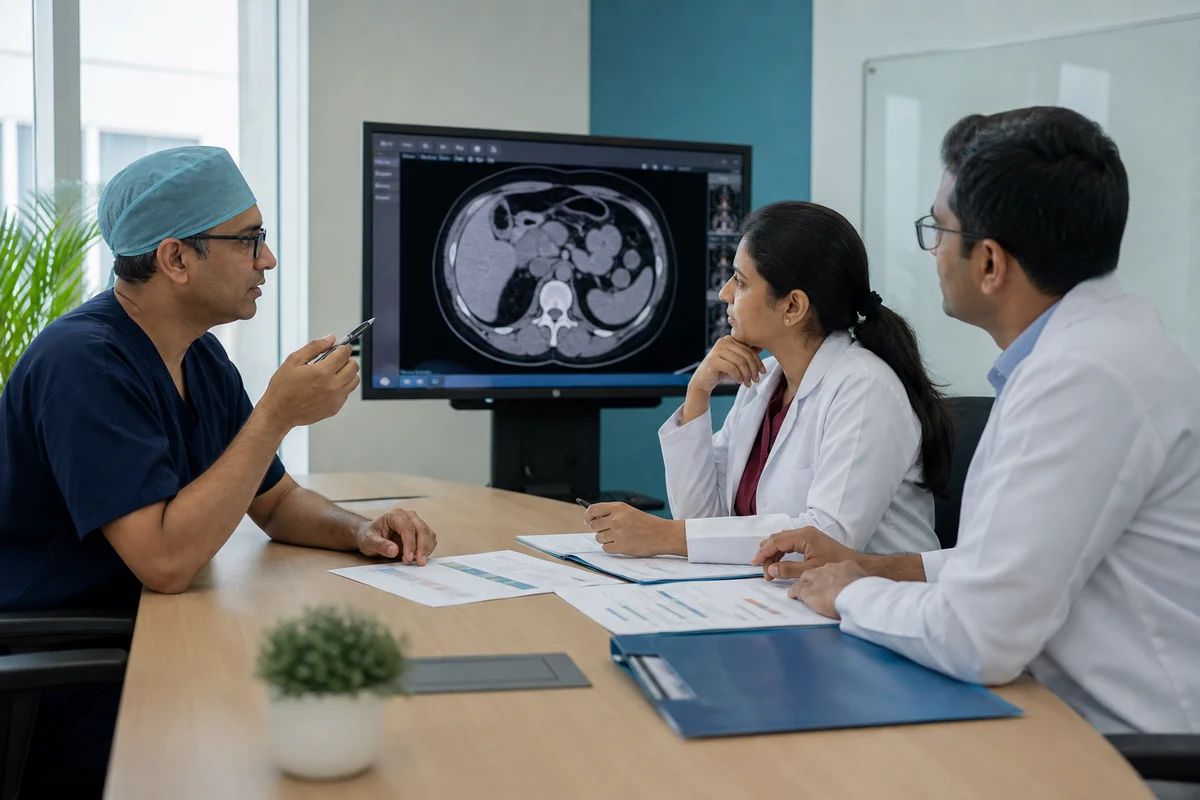
Review as a team
Treatment sequence is tailored to stage, biology and fitness.
Multidisciplinary care
Good cancer care may involve surgical oncology, medical oncology, radiation oncology, gastroenterology, radiology, pathology, anaesthesia, critical care, nutrition, nursing, pain and palliative care. The production page should explain the verified local or referral pathway.
The role of surgery
Surgery may aim to remove localised disease, relieve obstruction or bleeding, obtain diagnosis, or manage selected spread. The goal should be stated clearly. An operation is not automatically helpful when disease is widespread or the risks exceed likely benefit.
Treatment before or after surgery
Chemotherapy, targeted therapy, immunotherapy or radiotherapy may be recommended before or after surgery depending on cancer type and stage. Sequence is determined by a multidisciplinary team and may change according to response or new findings.
Whether surgery may be possible
Resectability considers the tumour’s relationship to major vessels and organs, presence of distant spread, organ reserve, nutrition and the patient’s overall health. A second opinion can review these factors but cannot promise an operation.
Preparation and prehabilitation
- Improve nutrition and treat anaemia where possible.
- Build walking, breathing and strength within safe limits.
- Stop smoking and review alcohol use with support.
- Optimise diabetes, heart, lung and other conditions.
- Plan family support, work, travel and recovery.
Recovery
Recovery depends on the organ and operation. It may involve drains, tubes, altered eating, bowel changes, stoma care, pancreatic enzymes or liver-function monitoring. Early movement, nutrition and clear warning-sign advice are important.
Nutrition
Cancer and treatment can affect appetite, swallowing, digestion and weight. Early dietitian input may be useful. Nutrition support should be individual and should not promote restrictive diets or unproven cancer remedies.
Second opinions
A second opinion may review pathology, stage, resectability and treatment sequence. Ask whether original images and pathology material are needed, how the case will be discussed, and whether care is offered directly or through referral.
Support for patients and families
Patients and families may need clear information, practical planning, psychological support, symptom control, financial guidance and palliative care at any stage. Palliative care can support quality of life alongside cancer-directed treatment.
Cancer-specific pages
Pancreatic Cancer
Jaundice, resectability and pancreatic-head or distal disease.
Liver Cancer
Liver reserve, resection and cirrhosis considerations.
Gallbladder Cancer
Incidental versus suspected disease and staging.
Stomach Cancer
Endoscopy, gastrectomy and nutrition.
Colorectal Cancer
Colon, rectal, stoma and multimodal pathways.
Oesophageal Cancer
Swallowing, nutrition and reconstruction.
References
- National Institute for Health and Care Excellence. Oesophago-gastric cancer: assessment and management in adults. NICE guideline NG83. Published 24 January 2018; updated 4 July 2023; reviewed 13 May 2026. Accessed 23 July 2026.
- National Institute for Health and Care Excellence. Colorectal cancer. NICE guideline NG151. Published 29 January 2020; updated 15 December 2021; reviewed 29 April 2026. Accessed 23 July 2026.
- National Institute for Health and Care Excellence. Pancreatic cancer in adults: diagnosis and management. NICE guideline NG85. Published 7 February 2018; reviewed 17 September 2025. Accessed 23 July 2026.
- National Cancer Institute. Surgery to Treat Cancer. Reviewed 8 November 2024. Accessed 23 July 2026.
These sources support general patient education. Cancer diagnosis, staging and treatment planning require cancer-specific multidisciplinary assessment.
Frequently asked questions
No. Surgery depends on cancer type, stage, biology, organ function, fitness and whether complete or useful removal is feasible.
They confirm the cancer type and show where disease is located, which helps the team compare surgery, medicines, radiotherapy and supportive care.
A group of relevant specialists who review findings and agree a coordinated recommendation.
Yes, for selected cancers. Chemotherapy or radiotherapy may be used before surgery to improve disease control or test tumour biology.
Bring imaging, radiology reports, endoscopy, pathology, treatment summaries, blood tests and current medicines.